A new hire may know their trade while still entering a completely unfamiliar workplace. Machinery, routes through the premises, instructions and contact people differ between establishments. For a manager, preparing orientation therefore means making the work understandable before expecting independent performance. The following practical approach should be adapted with your health and safety team.
Start with the actual job
Before the person arrives, ask the supervisor to describe a concrete working day: where the employee enters, how they receive instructions, which tools they use and whom they contact about a difficulty. Compare that description with the job posting and recruitment conversations. Any difference should be explained rather than discovered during the first shift. Also identify tasks that require training or authorization before they can be performed.
Prepare a short tour of relevant places: the workstation, shared facilities, exits and applicable assembly points. The aim is to help the new hire find their way without assuming that previous experience taught them your establishment’s particular rules. These examples organize orientation; they are not a risk assessment of your business.
Assign someone who can answer questions
Name an orientation lead and an identifiable replacement. Explain how to reach them when teams work across shifts or sites. An available colleague can demonstrate a procedure; the supervisor remains the reference for confirming authorized tasks and training needs. Avoid vague advice such as “ask someone”: it leaves the new hire to choose an answer at random that may be incomplete.
The Canadian Centre for Occupational Health and Safety recommends orientation suited to the workplace and checking understanding. Its checklist covers matters including hazards, emergency procedures and ways to report concerns. Use this resource to prepare questions with the appropriate people rather than copying a list without considering the job.
Check understanding with a situation
After explaining a procedure, invite the employee to describe the steps in their own words. For example: “If you notice damaged equipment before starting, whom do you tell, and what do you do next?” An uncertain answer identifies something to revisit. This conversation can also reveal overly technical vocabulary or a document that is difficult to read. Adapt the support to the person’s language comprehension and accessibility needs.
Spread information according to the work planned. CCOHS notes that not all training can be absorbed on the first day. This gradual approach does not permit assigning a task before the necessary instructions. Plan what will be shown immediately, what will be practised with support and what will be reviewed in a later conversation.
Keep a useful record, then follow up at work
An orientation record can include the topic, date, person who explained it, material used and follow-up needed. Distinguish “document provided,” “demonstration completed” and “understanding checked”: they describe different actions. Store the information in the business’s designated location and limit access to people who need it.
During follow-up, ask which instructions remain unclear and which difficulty was not anticipated. Improve the process for the next hire. Good preparation connects recruitment, the supervisor and the actual workplace. To structure your recruitment needs, speak with IR Recrutement about the tasks, working environment and available support, without sharing unnecessary personal information.
Sources and photograph
CCOHS — Orientation for Workers: General and checklist, consulted November 6, 2026. Organizational guidance to adapt to the workplace and applicable requirements.
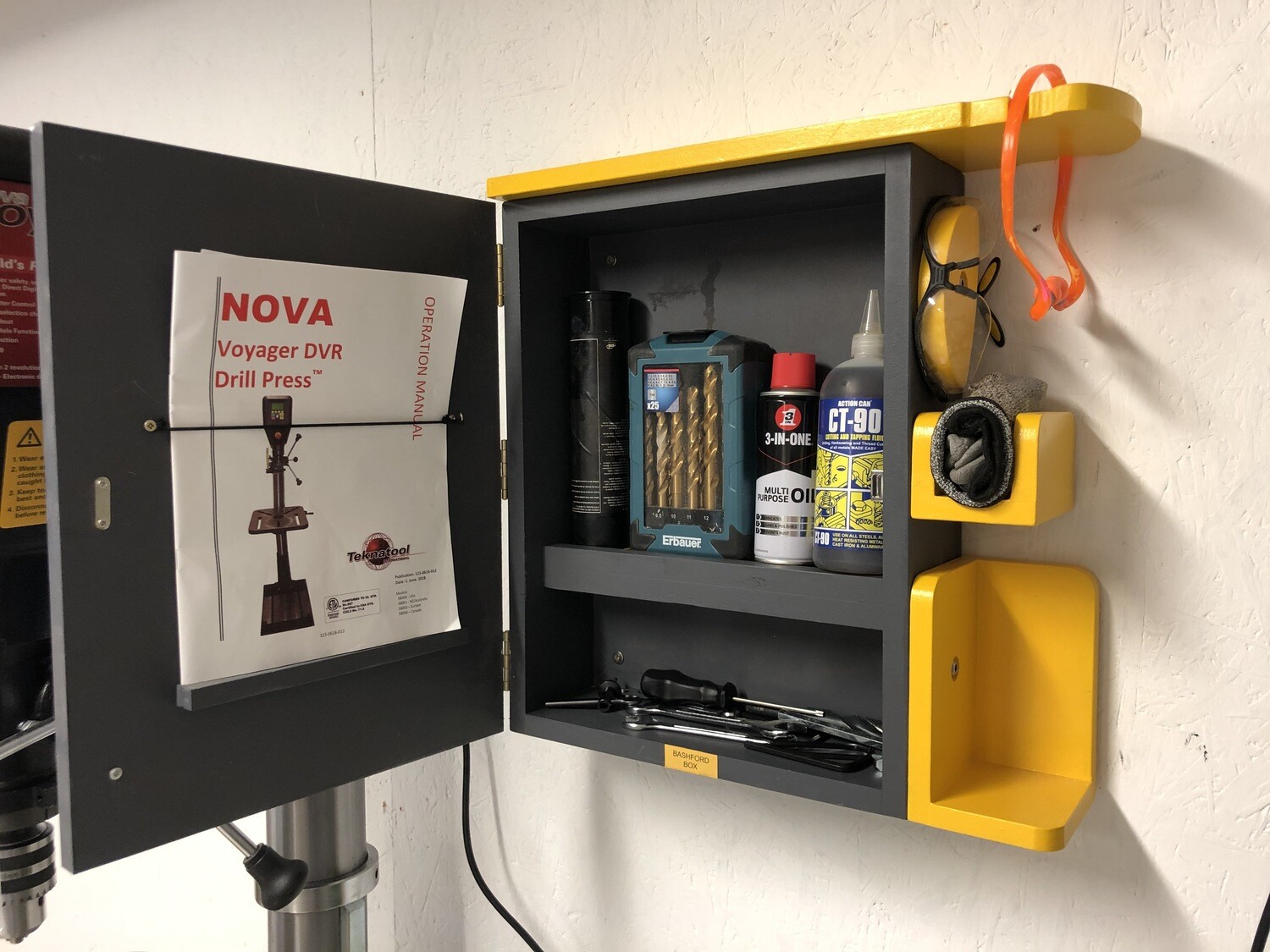
Illustrative photograph: safety storage at a workshop station, unrelated to any IR Recrutement client or facility. CuriousJKD, Wikimedia Commons, CC0 1.0. Original photograph, unchanged.
